

About Us
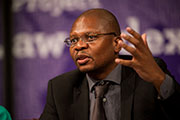
The WJP is an independent, multidisciplinary organization working to advance the rule of law worldwide.
Our Work
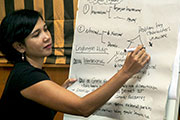
We engage advocates from across the globe and from multiple work disciplines to advance the rule of law.
The Technology panel at the World Justice Forum IV discussed the benefits and complications that accompany technological advances, and also explored what doors technology might open next.
As technology expands into new fields, people discover innovative ways to access and share information that can improve the standard of living for people all over the world. Technological advances in instant communication and documentation are especially useful in a variety of fields that impact the rule of law, such as journalism, voter registration and monitoring, and political activism. These advances help to bring important information to wider audiences, while addressing issues of diplomacy, corruption, human rights, and more.
Moderator
Sam Muller, Founding Director, The Hague Institute for the Internationalisation of Law (Netherlands)
Panelists
Jacob Appelbaum, Advocate, Security Researcher, & Developer, the TOR project (USA)
Rick Falkvinge, Founder & Chief Evangelist, Pirate Party (Sweden)
Jacques-Philippe Piverger, Co-Founder & CEO, MPOWERD, Inc. (Haiti/USA)
Katrin Verclas, Co-Founder & Editor, MobileActive.org (Germany)