
About Us

The WJP is an independent, multidisciplinary organization working to advance the rule of law worldwide.
Our Work

We engage advocates from across the globe and from multiple work disciplines to advance the rule of law.
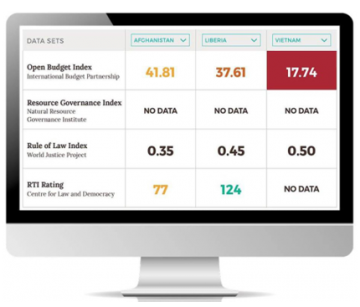 Last month, the World Justice Project joined more than 20 organizations—including Results for Development Institute, Millennium Challenge Corporation - MCC, Hewlett Foundation, Omidyar Network and more—in the launch of a new Governance Data Alliance (GDA) tool that compiles a range of governance data for the first time.
The GDA is a new organization bringing together groups producing data on the topic of governance—centralizing their information in one location rather than requiring people to search across the internet for it. It also aims to increase knowledge sharing and partnerships among its members, allowing producers of data to collaborate and improve their own research. A key feature of the GDA website is that it allows for cross country comparison across all of its members datasets.
The World Justice Project's WJP Rule of Law Index and WJP Open Government Index datasets are included in the GDA's governance data dashboard, available here.
Many of the world's leading governance data producers are also included on the site, including top-level indicators from Transparency International, World Bank Group, Freedom House, Global Integrity, World Resources Institute, and others.
Learn more at: http://www.governancedata.org/about