
About Us

The WJP is an independent, multidisciplinary organization working to advance the rule of law worldwide.
Our Work

We engage advocates from across the globe and from multiple work disciplines to advance the rule of law.

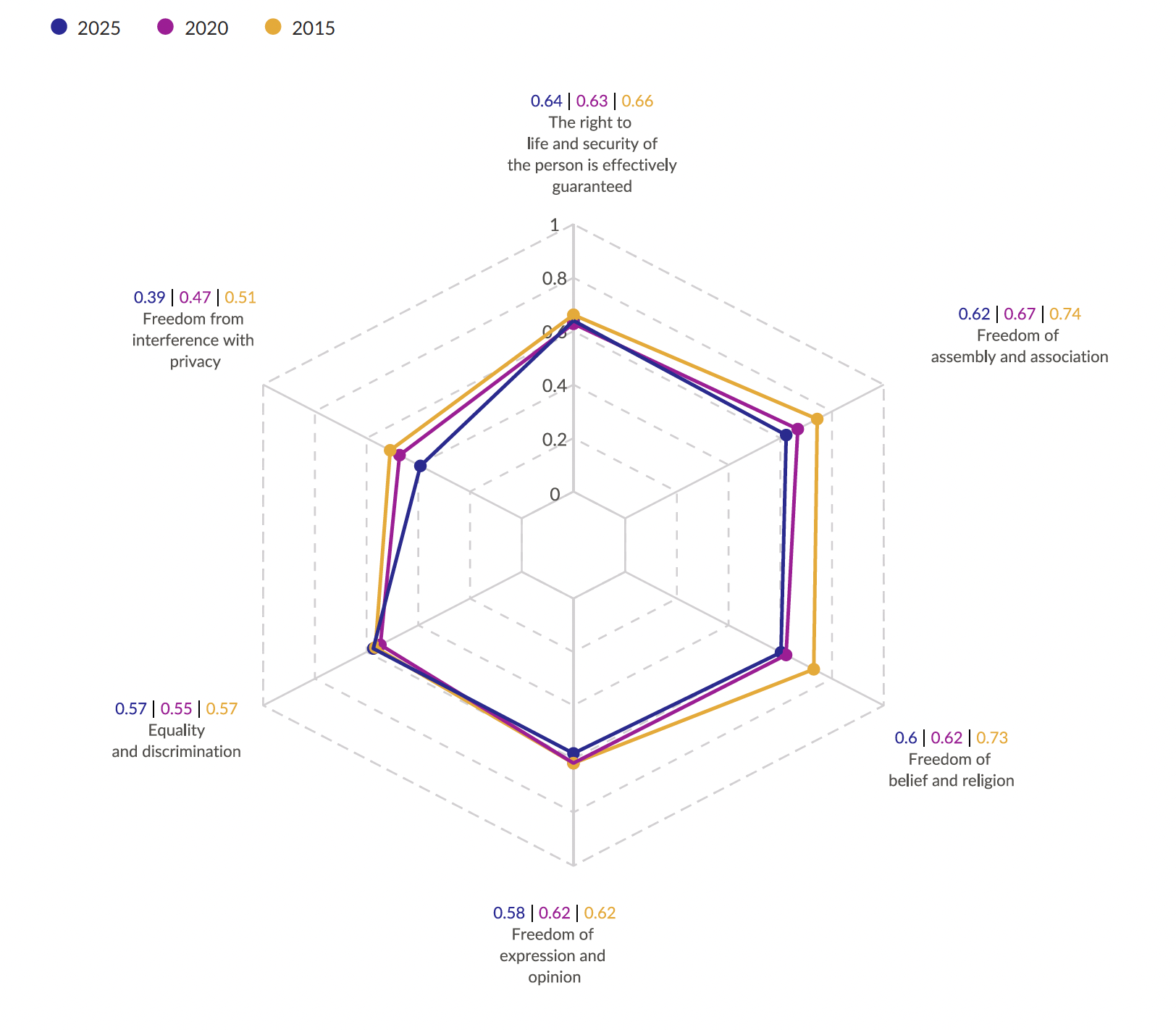
Mongolia maintains overall rule of law stability, leading the region in personal security and workplace protections, while simultaneously facing significant decade-long contractions across core civil liberties and privacy.
Below, we break down the findings from WJP’s 2025 Human Rights in Mongolia report.
Stability in a Global Recession
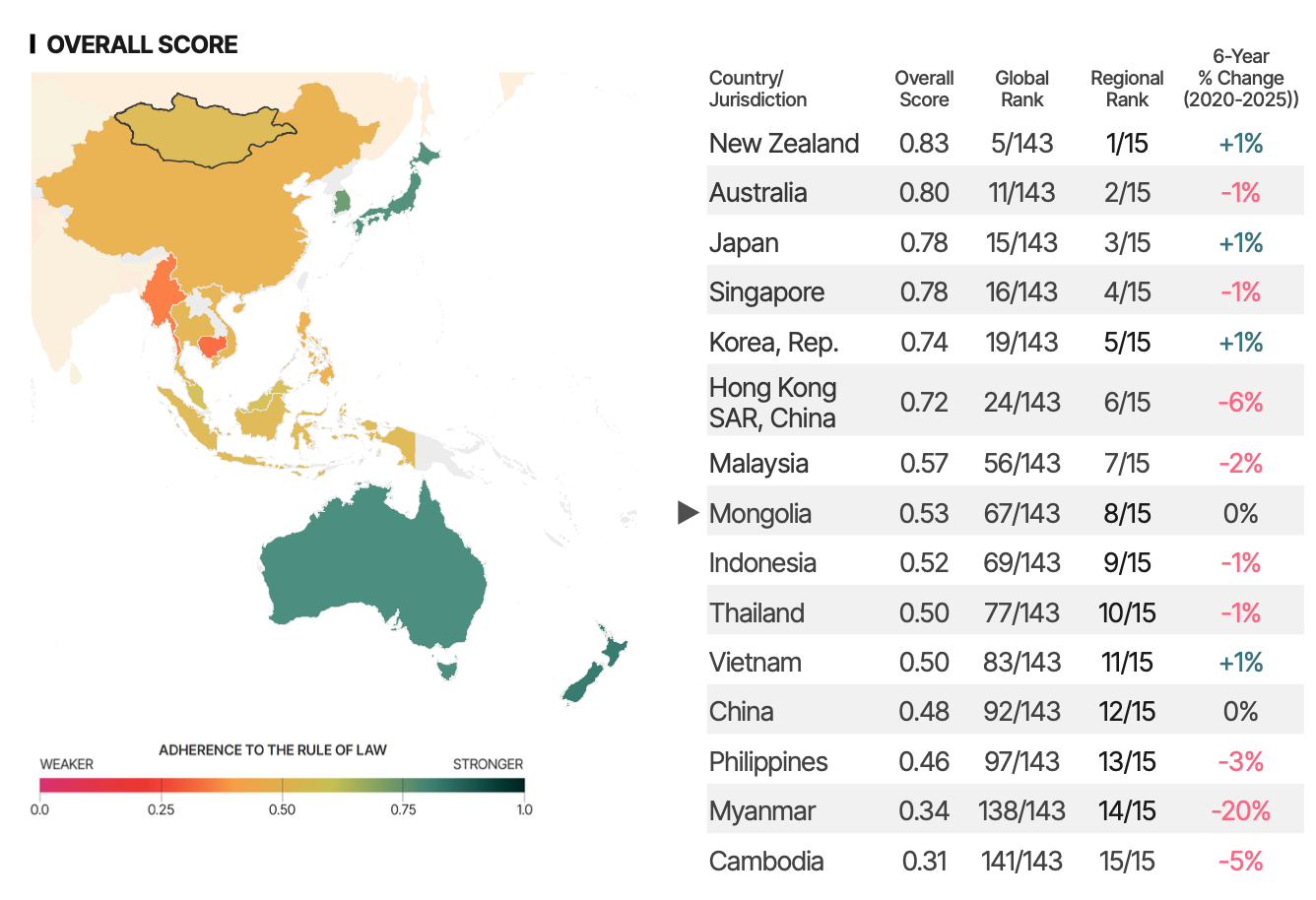
While 68% of countries worldwide experienced a decline in the rule of law this year, Mongolia’s performance remained stable, with an overall score of 0.53, placing it 67th globally out of 143 countries.
- Regional Standing: Mongolia ranks 8th out of 15 in East Asia and the Pacific.
-
Strongest Performance: Order and Security remains its highest pillar at 0.76.
Regional Strengths in Security and Labor:
- Mongolia leads its Asian regional peers in the right to life and security.
- Labor rights recovered by +3.5% over the last five years to 0.55, placing Mongolia among the region's top performers behind only Hong Kong SAR (0.60), the Republic of Korea (0.62), and Japan (0.75).
- Protection from expropriation without due process remains below the regional average, signaling limited safeguards for property owners when government intervention occurs.
Historic Highs in Civil Fairness & Due Process
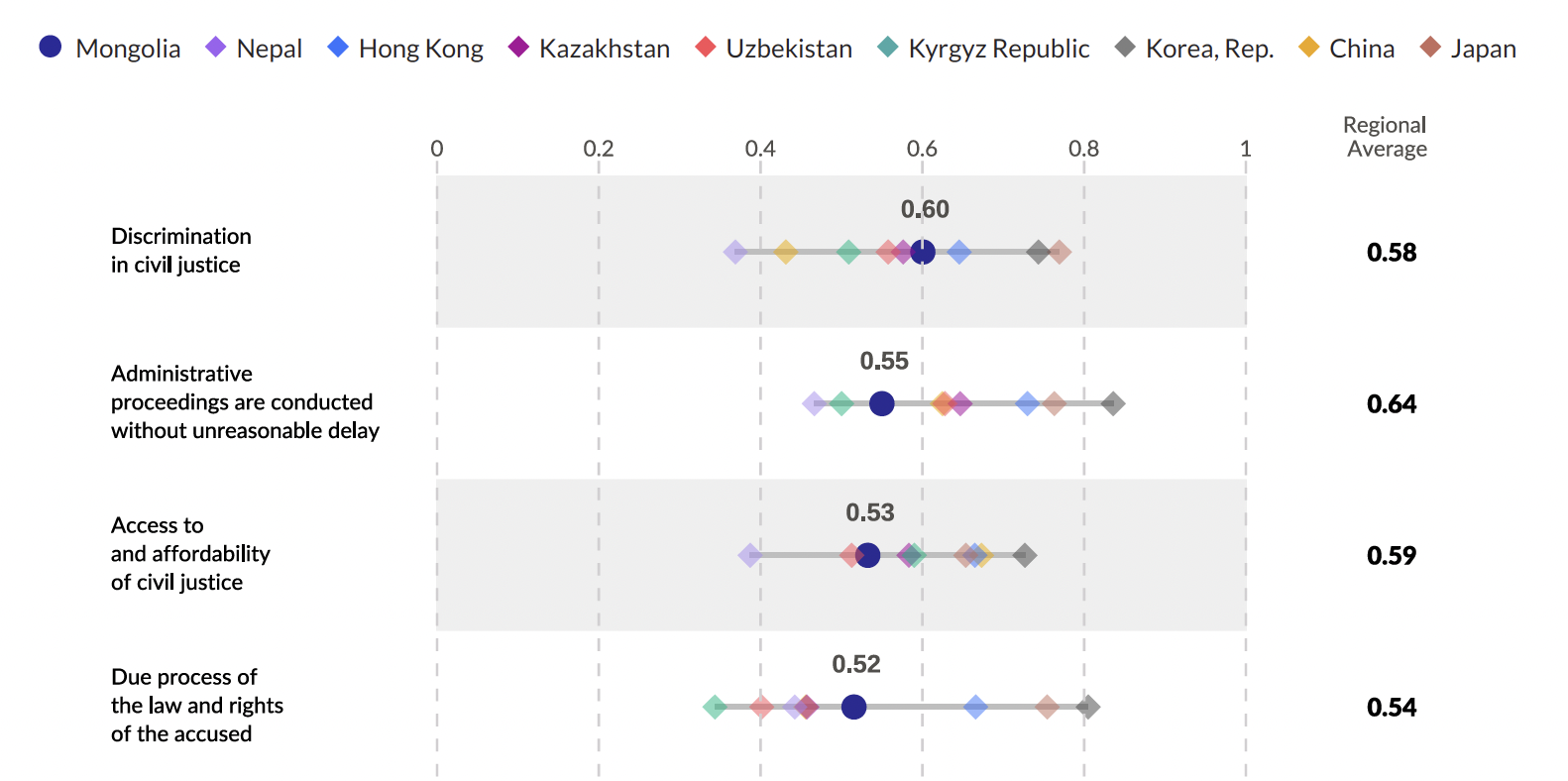
- Discrimination in civil justice reached a ten-year peak of 0.60 in 2025, surpassing the global average and ranking 4th among regional peers.
- Administrative proceedings also achieved decade-best timeliness with reduced delays (0.55).
-
Due process of law and the rights of the accused in criminal courts climbed to a ten-year high of 0.52.
Severe Erosion of Judicial Independence & Civil Liberties
- Improper government influence in criminal justice saw the sharpest decline of any justice indicator, falling -27.0% since 2015 to a low of 0.34.
- Criminal justice impartiality also slipped by -9.3% over the last five years, and civil court independence dropped -8.6% over the decade.
-
Four core civil liberties reached decade-long lows in 2025. The largest declines are in freedom of assembly and association (-16.1% since 2015), freedom of belief and religion (-17.4%), and freedom from interference with privacy (-23.0%).