
About Us

The WJP is an independent, multidisciplinary organization working to advance the rule of law worldwide.
Our Work

We engage advocates from across the globe and from multiple work disciplines to advance the rule of law.

Access free, global justice datasets from the World Justice Project. Download comparable data on access to justice, EU microdata on democratic perceptions, and open justice evaluations in Mexico.
Whether you are a researcher, advocate, policymaker, journalists, or data enthusiast, WJP’s essential datasets are ready for your analysis. Dive into the numbers behind the rule of law and help us turn data into action.
Our datasets cover global, regional, and national levels and include indicators on governance, fundamental rights, transparency, corruption, safety, access to justice, criminal and civil justice. Below you will find the main data sources, links to access them, and screenshots showing where the datasets can be downloaded.
1- Rule of Law Index
The global standard for measuring rule of law across 140+ countries and jurisdictions, used by governments, international organizations and the private sector alike.
Scope: Annual data since 2012
Measures: Government Powers, Security, Corruption, Human Rights, Judicial Independence and Civil/Criminal Justice. Explore all dimensions measured here.
Website: worldjusticeproject.org/index
Downloads available:
Historical (all countries)
Historical (by country)

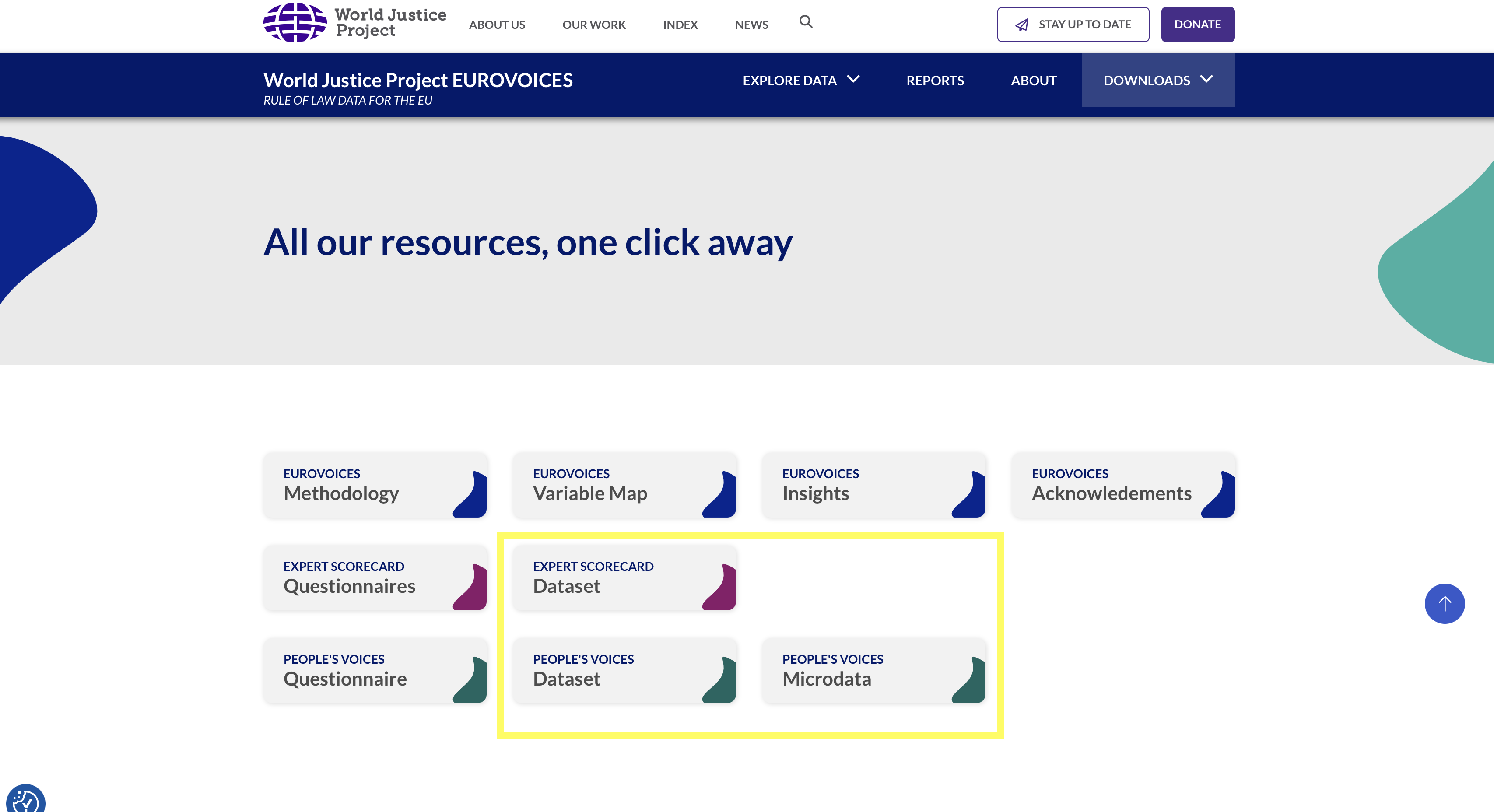
2- Eurovoices
Disaggregated public opinion and expert indicators in all EU subnational regions.
Scope: 27 member states I 110 subnational regions. Demographic disaggregation by age, gender, income, urbanization.
Measures: Democracy, Fundamental Rights, Safety, Transparency & Corruption. Explore all dimensions measured here.
Website: eurovoices.worldjusticeproject.org
Downloads available:
Expert indicators (all countries; all regions)
Percentage responses (all countries; all regions)
Microdata responses (all countries; all regions)
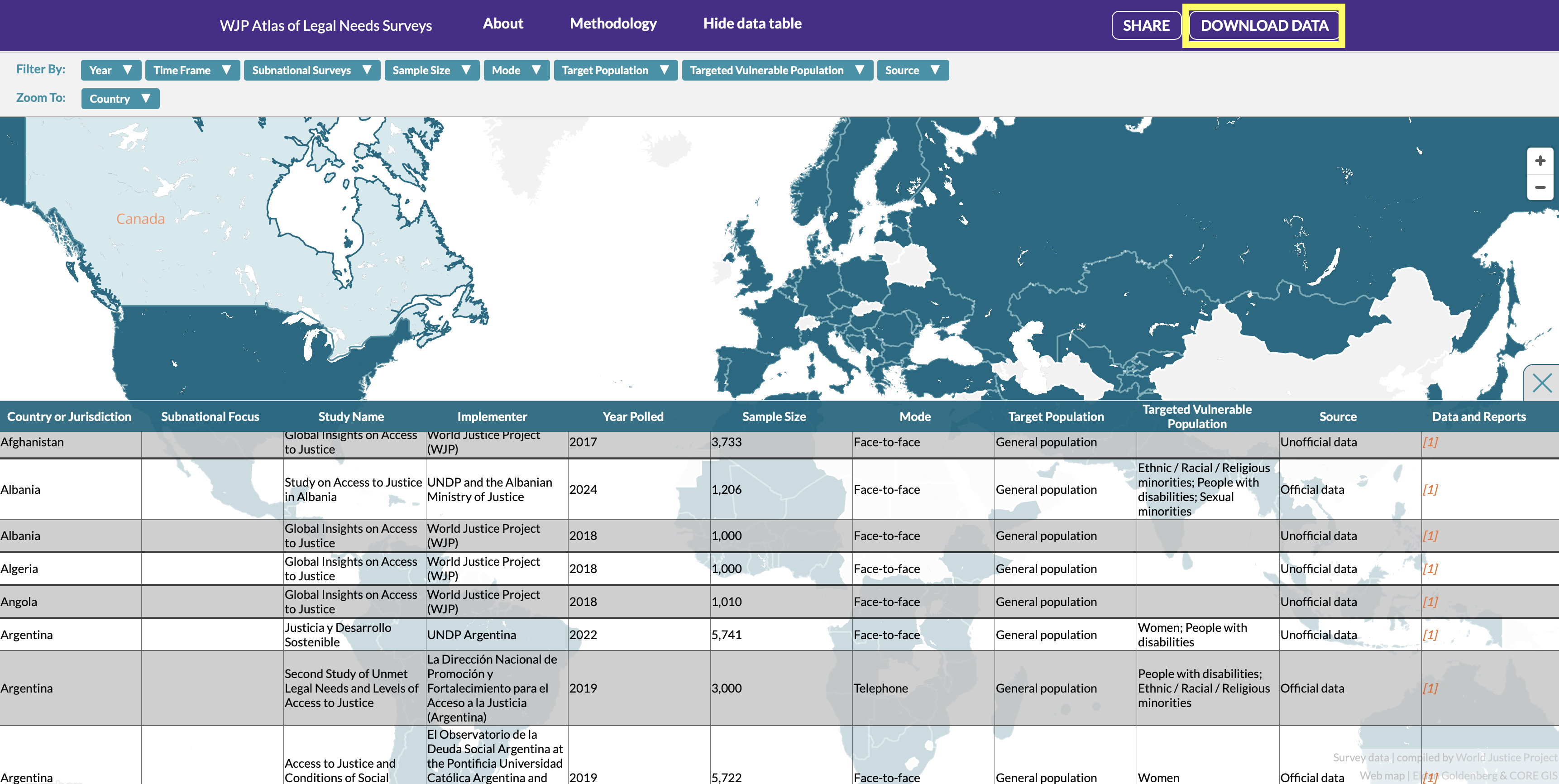
3- Atlas of Legal Needs
The largest global repository of people-centered justice data, a one-stop resource for access to justice advocates and researchers.
Scope: 112 countries and jurisdictions, including over 45 subnational surveys Measures: Legal Needs, Access to Justice
Website: worldjusticeproject.org/legal-needs-atlas/
Downloads available:
Evaluations (all countries)
4- Access to Justice
Comparable data on legal needs and access to civil justice.
Scope: 100+ countries
Measures: Legal Needs, Access to Justice
Website: Global Insights on Access to Justice
Downloads available:
Evaluations (all countries)

5- Mexico States Rule of Law Index
Rule of law evaluations for 32 states
Scope: Annual data since 2018
Measures: Government Powers, Security, Corruption, Fundamental Rights, and Civil/Criminal Justice.
Website: index.worldjusticeproject.mx
Downloads available:
Historical (all states)
Historical (by state)

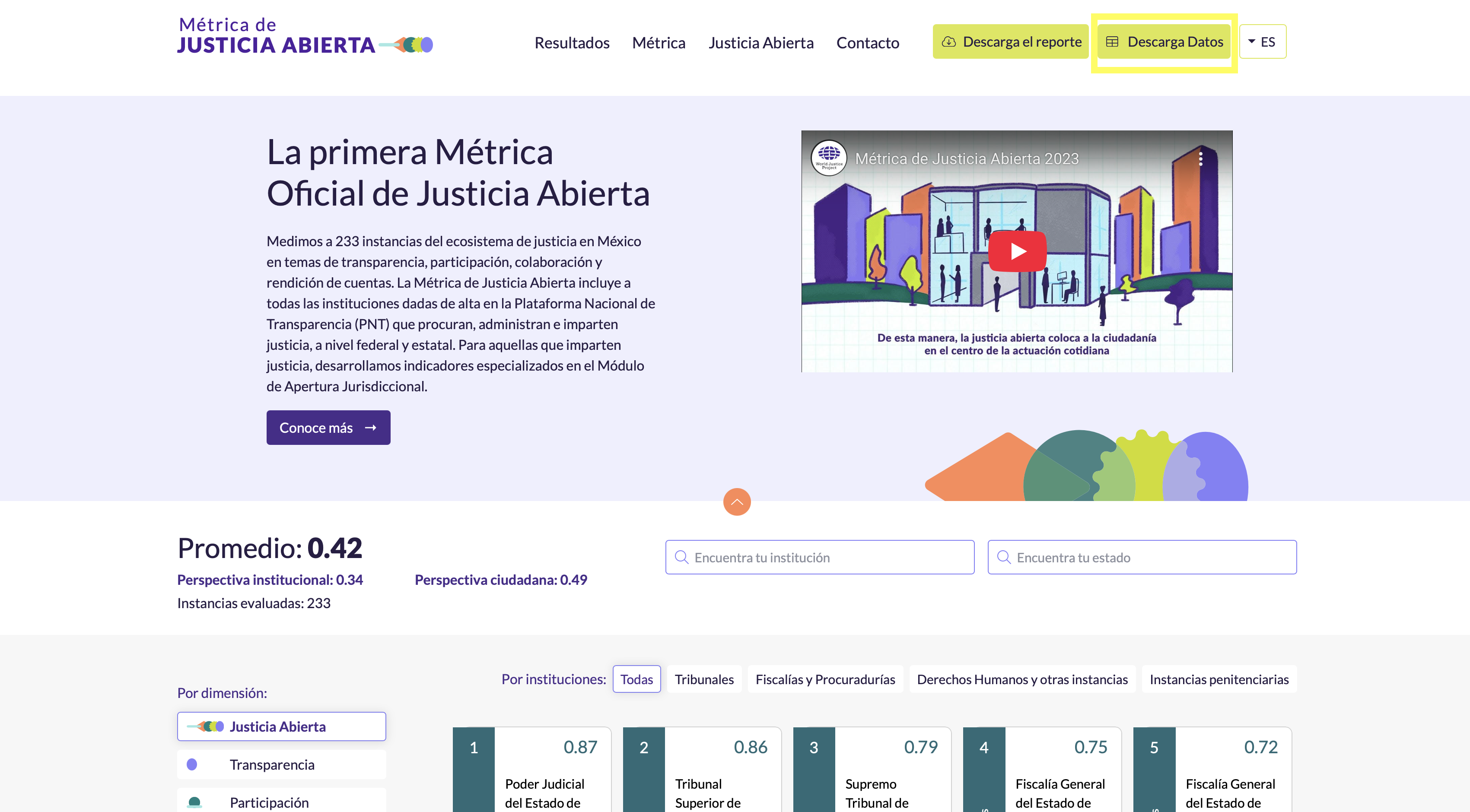
6- Open Justice
Transparency and participation in the Mexican justice system
Scope: 200+ justice system institutions (courts, prosecutors offices, human rights, prison systems)
Measures: Justice Ecosystem, Transparency, Participation, Collaboration, Accountability. Explore the dimensions here.
Website: justiciaabierta.mx
Downloads available:
Evaluations (all institutions)