It is with incredibly heavy hearts that we share the news of the passing of our founder and dear friend, William H. Neukom, known to all of us simply as Bill.
Bill was the driving force behind the World Justice Project (WJP), and his absence leaves a profound void in the soul of our organization. His belief in justice was unwavering. His deep humanity and his remarkable gift for bringing people together—regardless of background or origin—shaped everything we do at WJP.
WARSAW, Poland – 26 June 26, 2025 – A global coalition of organizational leaders and justice advocates issued an urgent call to action today to reverse the worldwide decline in the rule of law, marked by the release of the Warsaw Principles at the conclusion of the 2025 World Justice Forum. The Warsaw Principles represent a unified front against rising authoritarian pressures and a framework for collective action to strengthen accountability.
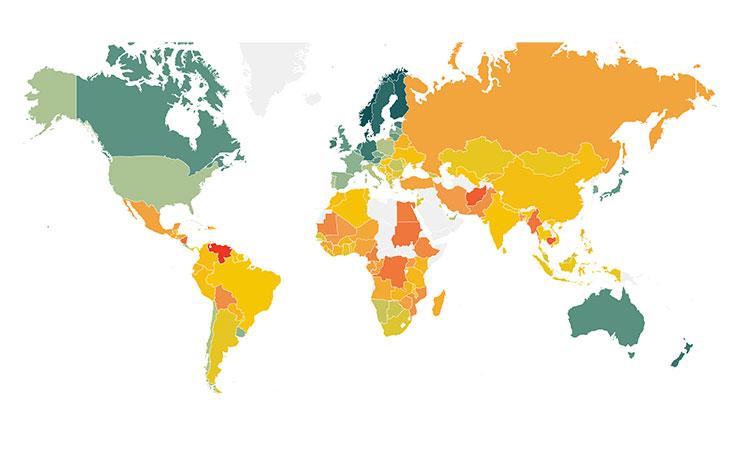
WASHINGTON (October 28, 2025) – The global rule of law recession has accelerated, according to the new WJP Rule of Law Index® 2025. A stark 68% of countries declined in their rule of law in 2025, compared to 57% in the previous year.
Decision makers should respond to people’s justice needs by shifting measurement toward justice outcomes that reflect user experience, trust, and fair resolution rather than relying primarily on institutional metrics.
Dominican Justice Outcome Indicator Framework is a practical measurement tool that transforms fragmented data—from court records to user surveys—into a holistic picture of the justice experience.
The decline of trust in public institutions is not a phenomenon confined to any single border; it is a defining global crisis of the 21st century. From the Americas to Southeast Asia, intensifying political polarization and a growing sense of disillusionment with traditional political institutions are evident. However, to understand the mechanics of this decay, we must look to where the data is most granular.
The rule of law is a vital economic asset for the private sector. Learn how predictable legal systems drive investment, mitigate risk, and why businesses must advocate for judicial independence in an era of global backsliding.
Access free, global justice datasets from the World Justice Project. Download comparable data on access to justice, EU microdata on democratic perceptions, and open justice evaluations in Mexico.
WJP’s people-centered analysis finds injustice and poverty are closely linked, as wealth deprivation fuels cycles of severe legal problems, unmet needs, and hardship.
The 2025 WJP Rule of Law report for Thailand explains trends in institutional trust, fundamental rights, and the rising challenges of discrimination and corruption.
Maria Ressa and Anne Applebaum discuss how autocracies weaponize AI, deepfakes, and social media to spread disinformation, and how we can protect journalism.
We create a press release for every country considered in the WJP Rule of Law Index, available in different languages. To find a specific press release, go to the relevant region and select the country of interest from the drop-down menu.
The World Justice Project (WJP) is releasing microdata for the first time, drawing on data from the WJP EUROVOICES general population poll (“People’s Voices”). It features detailed, anonymized survey responses from more than 64,000 individuals living in 110 subnational regions across the 27 European Union (EU) Member States.
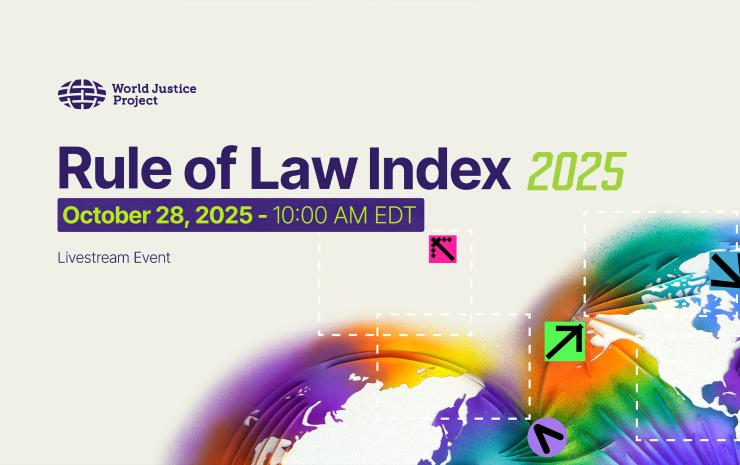
Mark your calendar! On October 28th, the World Justice Project will release the 2025 WJP Rule of Law Index®, our flagship measure of how the rule of law is experienced and perceived around the globe.